An anniversary is one of the most dangerous briefs in branding. The client arrives wanting something that feels new, and the temptation is to redraw the logo. But ten years of recognition is an asset that took ten years to buy, and a redraw spends it in an afternoon.
The useful question is narrower: what can a milestone honestly own? Usually three things — a commemorative lockup that sits beside the master mark rather than replacing it, a single accent that appears only during the anniversary year, and a motion signature that says something print cannot.
What the brief actually needed
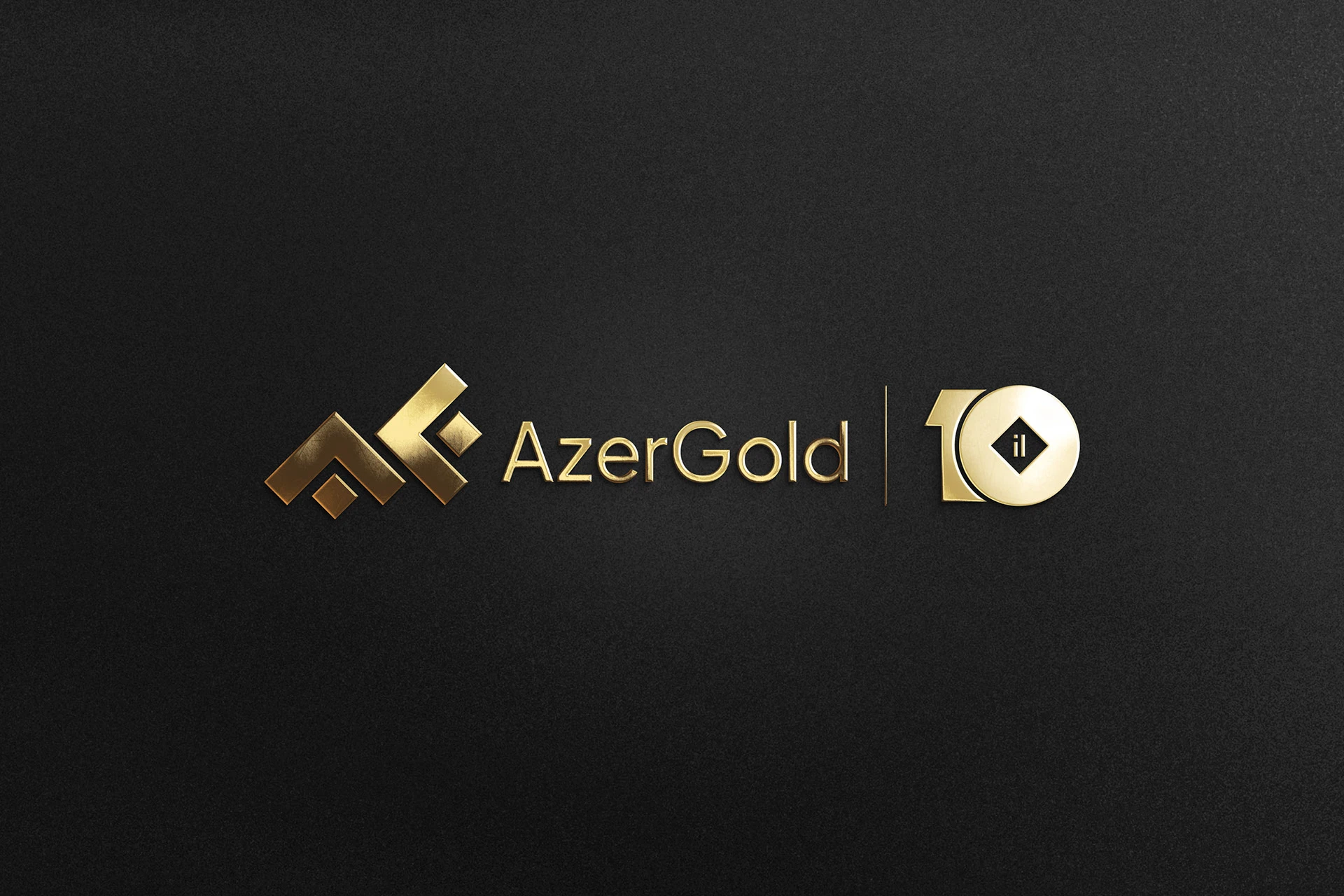
AzerGold plays a strategic role in Azerbaijan's mining sector, turning underground resources into value. Ten years in, the company had built real trust — but that progress had never been given a clear visual expression.
So the concept was not decoration. It was a way to describe a journey: from depth to surface, from raw material to finished value. The anniversary mark had to carry that idea and still survive the places a mining brand actually lives — a helmet, a site sign, an annual report cover, a phone screen. That last constraint kills more anniversary marks than any aesthetic argument. If the numeral stops reading at 24 pixels, it is a poster, not an identity.
Why motion carries an anniversary better than print
An anniversary is a claim about time, and motion is the only medium that can show duration. A static mark can say "ten years". A sequence can show ten years happening.
The film was built in Cinema 4D with Redshift, because a gold brand punishes dishonest material. Gold is a difficult surface: it takes its colour almost entirely from what surrounds it, so a gold that convinces under one lighting setup turns to brass under another. Getting the reflections right mattered more than any camera move.
The motion work then fed back into the static system — the frames that read best became the key visuals, not the other way round.
A short checklist before you redraw anything
Ask what equity you would be spending. If the existing mark is recognised, the anniversary is a layer, not a replacement.
Design the smallest size first. A commemorative lockup that only works at poster scale is a decoration.
Decide the end date. An anniversary identity that never retires quietly becomes the brand, and the real mark gets lost.
Let motion lead where the story is about time — then pull the static system out of it.