An exhibition stand is designed backwards, starting from the furthest point a visitor can see it. On a hall floor there are three distances, and each one needs a different decision.
At forty metres a visitor sees a silhouette and a colour. Nothing else. That distance is won by form and height, not by content. At ten metres they read one line and decide whether to change direction. At one metre the stand stops being architecture and becomes furniture — somewhere to stand, put down a coffee, and have a conversation.
Most stands fail because they are designed at one metre and hoped to work at forty.
The TPAO concept
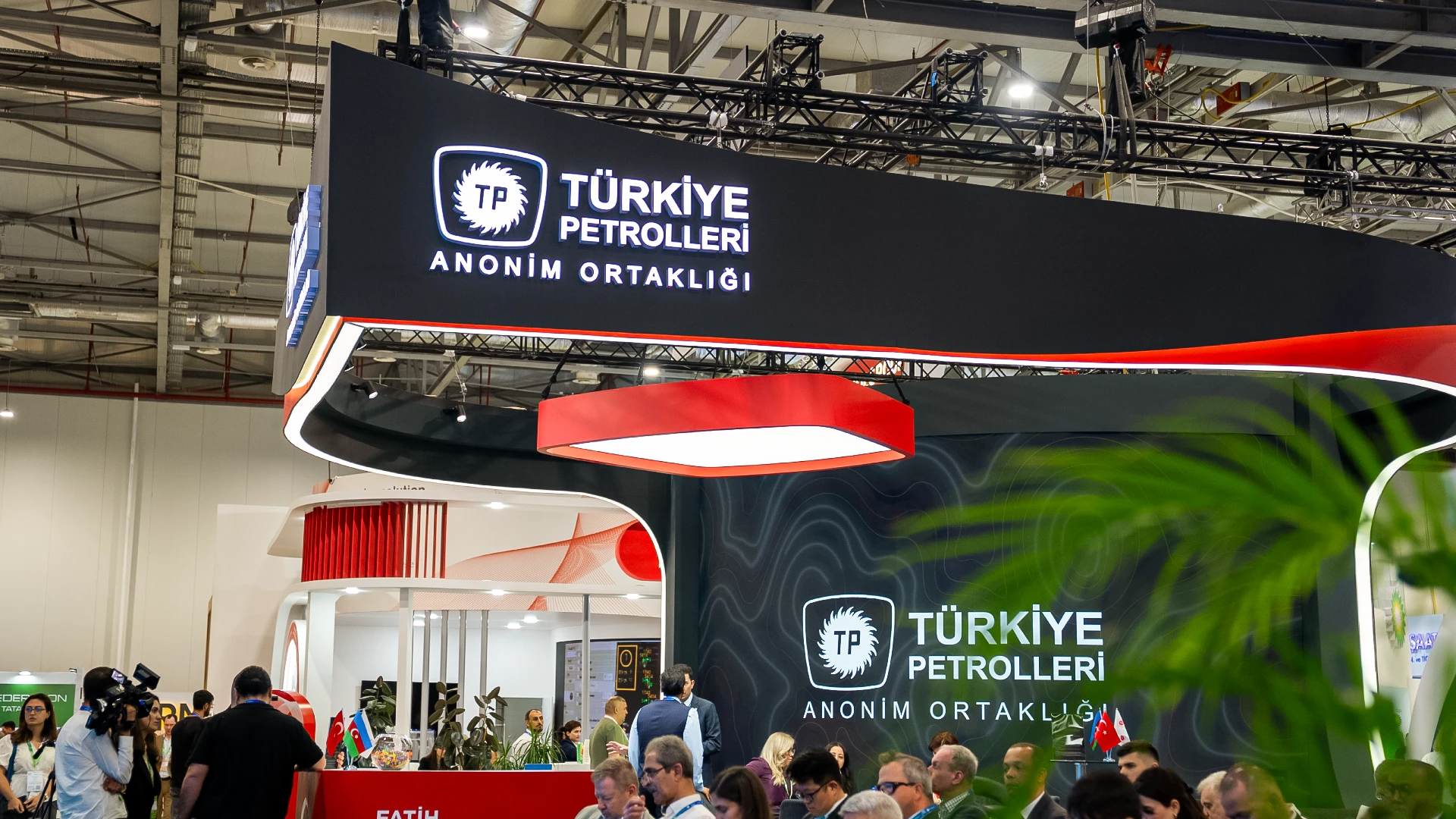
For the 31st International Caspian Oil & Gas Exhibition, Element designed and delivered the stand for Turkish Petroleum Corporation. The concept drew on the strategic vision of Sultan Mehmed the Conqueror, translated into contemporary architectural language rather than historical pastiche.
That translation is the whole job. A historical reference used literally reads as a theme. Used structurally — in proportion, rhythm, the way a mass is carried — it reads as confidence.
3D is a contract, not a presentation
The renders were not made to sell the idea internally. They were made because a stand is built once, in a few days, by a crew working from drawings, with no second attempt.
Modelling it fully means the sightlines are verified before anyone quotes for material: what blocks what, where the light falls, whether the logo is legible from the main aisle, how the structure behaves when the neighbouring stand turns out taller than promised. Every problem found in the model is a problem not found on site at midnight.
Motion is the only surface you can change
Everything else about a stand is fixed the moment it is built. The screens are not. That makes the motion content the only element that can still respond — to the hour, the audience, the announcement that moved forward.
So the film is designed as part of the architecture rather than dropped into it: cut to be legible in peripheral vision, silent by default, and built from the same geometry as the physical structure, so the screen does not look like a television someone carried in.